Table Of Content

Many of today’s classrooms are far removed from the one-room schoolhouse of days past. Learning is no longer even limited to a single shared classroom space — today’s students learn in virtual classrooms, experiential classrooms without walls, and even tall ships or the great outdoors. Overly bright colours such as orange or red could lead to overstimulation, while dull colours such as white resulted in understimulation. An effective way of striking the balance is to provide neutral coloured walls with a more brightly coloured feature wall.
Mix up Your Seating Options
No student should be left out and can easily communicate with their mates. Browse over 500+ educator courses and numerous certificates to enhance your curriculum and earn credit toward salary advancement. How to enrich your educational community through continuing professional development.
Step 5: Unlock Access to Our Education Experts
Versatile furniture that can be easily rearranged helps support different activities, learning groups of different sizes, and a variety of teaching styles. A flexible classroom also supports students with a variety of learning and work styles, which gives students the freedom to learn in the way that’s best for them. We’re sure you guessed that technology would be part of the 21st century classroom, but did you guess “light”? Yes, researchers have determined that bright light (especially natural light) and vibrant color are conducive to brain activity and learning. In one study, learning capabilities improved 7-26% when students were exposed to adequate natural lighting. In this new classroom, however, we must be both flexible and tech-friendly, so it’s important to include options for dimming the lights, to make devices or video screens easier to see.
Create Spaces to Showcase Learning
With unlimited design freedom, you can craft the architecture of your space and outfit it with furniture configurations that serve the unique needs of your learning environments. The tool captures the dimensions of the room and distance between furniture and other fixtures to make space planning a pleasure. Creating a classroom design that is conducive to learning can be difficult.
Also very good for guided practice which involves a lot of presentation and modelling from the teacher before students get to have a go themselves. Use the think-pair-share method when trying to get students to socially interact. Explicitly model group work strategies to your students so they have a clear understanding of behavior expectations. You can also get the students to create group names for their table. Nonetheless, this format is one of the most popular contemporary class layouts and is commonly seen across age groups, including in college seminar classes. Perfect for organising medium to large-sized discussions, the fishbowl arrangement separates students into an inner and outer circle.
Additional Classroom Design Resources
With fewer visual stimuli competing for attention, students are encouraged to think more creatively and generate their own ideas. Minimalist classrooms often feature neutral color palettes, simple furniture, and ample open space, providing a blank canvas for imagination and innovation. Our 21st century classroom must support these collaborative, social learning activities, as well as hands-on experimentation and discovery.
Additional elements such as blinds, desks, and chairs can then offer matching flashes of colour to invigorate the space, stimulate the mind, and bring together a cohesive colour palette. Including natural elements in the classroom, such as plants and wooden furniture, may also improve learning and behaviour. Good natural light can help create a sense of physical and mental comfort which is conducive to student performance. Much research has been conducted on the importance of classroom design on student learning. Evidence shows that physical design elements have the ability to influence student behaviour – for better or worse – which, in turn, affects learning, engagement, interaction, and concentration at school.
Consider Your Students’ Perspectives
"By equipping incarcerated learners with invaluable digital literacy skills and boosting their self-efficacy, our program aims to foster the skills necessary to thrive in today's technology-driven world." As it happens, this student’s sister was coming into my program, and he would be graduating, but he approached me one day after class and mentioned that their father might be able to help. “I’m going to tell my dad about our classroom setup,” he said to me, “I think he can help with some computers, and let’s just see where it goes.” I agreed, with no intention of asking for anything except suggestions. Also, consider arranging the classroom for your kids to move around safely and easily. Discover how teacher communities provide opportunities to learn, collaborate, and grow on an educational journey with like-minded peers.
Unlocking The Power Of Effective Teaching Strategies In The Classroom
By implementing the principles and strategies mentioned above, educators can create an inviting and functional space that supports student engagement and success. Flexible and modern classroom design is essential to facilitate cooperative learning and boost student engagement. Ideally, seating arrangements should be easy for teachers to adjust to accommodate various goals and get the best from students regardless of the context. A well-designed classroom captivates students’ attention, reduces restlessness, and fosters a positive attitude toward learning.
Teachers are notorious hoarders; we accumulate things over the years, and no matter how often we clean out our room, the stuff never goes away. Now, I’m not telling you to go full Marie Kondo, but really assess what you USE and NEED. If there are activities you like, take a picture and keep it in a binder along with master copies, instead of keeping bulky projects. If there are materials or resources you haven’t used in a year, maybe it’s time to find them another home. Having too many materials makes the space feel smaller and overwhelming. For the items you do keep, find them organized homes in bins or inside cabinets to diminish the cluttered look.
A new classroom designed for active learning opens on campus - Toronto Metropolitan University
A new classroom designed for active learning opens on campus.
Posted: Thu, 26 Oct 2023 07:00:00 GMT [source]
To provide the best chances of success, a learning space's design must align with overarching campus plans, strategies, and support infrastructures. It must also involve all key stakeholders from the beginning of the process, lest the learning space languish and have a minimal impact on teaching and learning practices. Exposure to resonant cultural imagery on walls and in materials—what researchers often call the “symbolic classroom”—also appears to improve a sense of belonging and has positive effects on engagement and academic outcomes. In many cases, modern electronic devices and technology are forced into physical spaces that were designed up to decades ago. New technology is often arranged according to old pedagogical models, often in front facing rows and columns. However, the limitations placed upon how teachers can operate are not limited to technology.
Wireless content sharing makes it fast, easy and efficient for students to display content. The most robust solutions work with any personal or school-issued device. ViewSonic content sharing options include the ViewSync® 3 wireless interactive presentation gateway, the ViewStick 2 wireless HDMI adapter, and myViewBoard.com collaboration software. ViewSonic offers robust collaboration software from partner Quizdom.
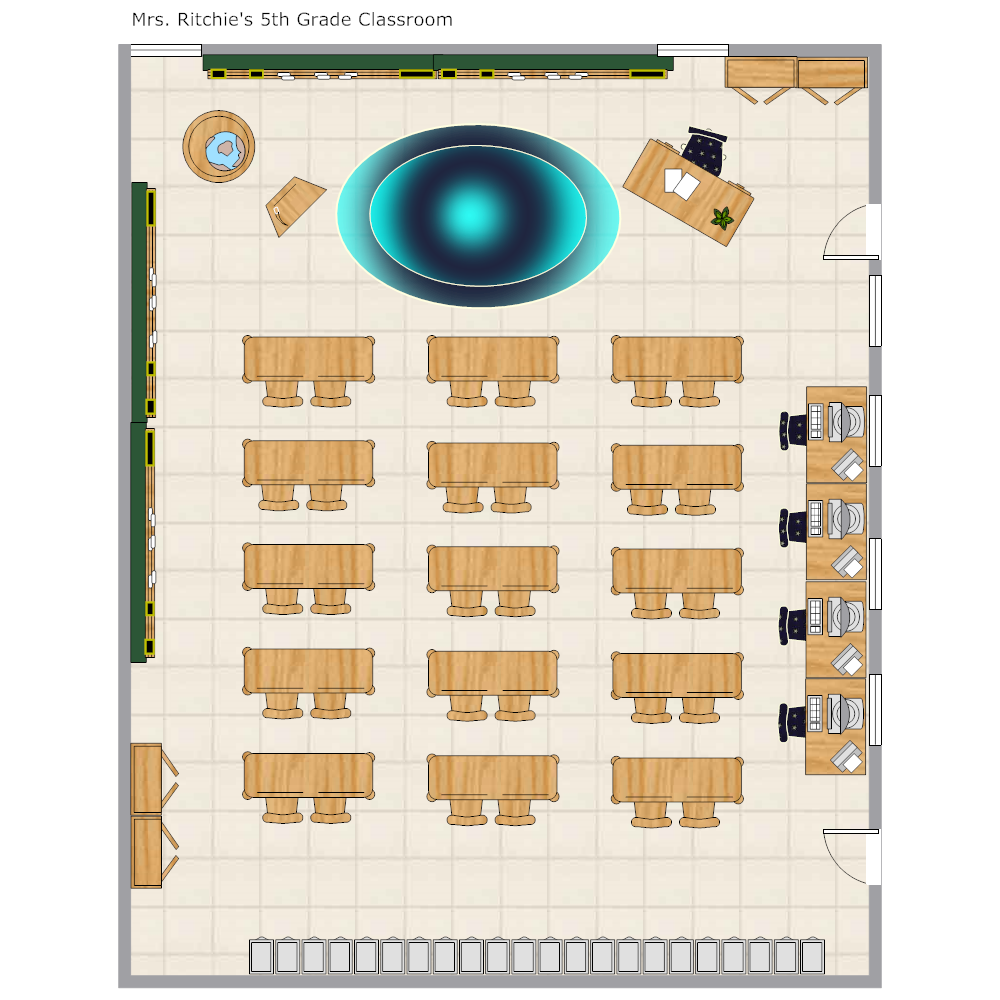
Yet some things are hard to doubt because of the copious evidence testifying to their existence. A great body of evidence makes a strong case for the value of active learning compared to its transmission-based predecessor, lecture-based learning. Instead of requiring students to learn, work, and think in one place all day, consider how your space might become more flexible. The long rows mean students are often tripping over each other’s chairs when trying to get in and out of their space. Consider the needs of children with mobility issues and physical disabilities when designing this space. I’ve found this layout very easy for the teacher to access every student’s desk space quickly to provide tailored support.
Teachers who want to emphasize a more traditional classroom layout may instead opt to use a smaller screen that’s obscured in a part of the room to better emphasize the traditional lecture format. Classroom layout may negatively impact more than only student participation. Students may at times be positioned ins such a way that they are unable to see charts or the blackboard that a teacher is using. When designing a classroom, teachers should consider every angle at which students will be seated. Your students’ work and product should help you decide if your classroom is working. Teachers spend time creating their classrooms prior to student arrival, but often the design that works in September is not the design that works in January or in May.


No comments:
Post a Comment